Blog
Arginine and Citrulline Explained: What the Research Used and What Memocept's Capsule Holds
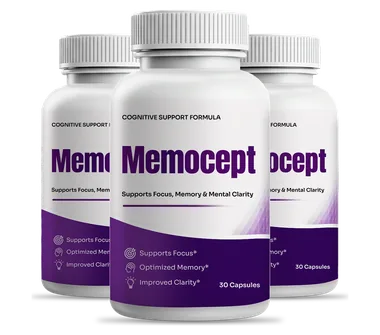
Arginine and citrulline are amino acids your body uses to make nitric oxide, which helps blood vessels relax. Studies gave gram doses: 2-10 g of arginine for exercise and 3-9 g of citrulline for blood pressure (ODS, Exercise supplements) (Barkhidarian et al., 2019). One Memocept capsule lists 400 mg of arginine and 200 mg of citrulline. No study we found tested these amino acids for memory.

The basics
What are arginine and citrulline?
Arginine and citrulline are amino acids. Amino acids are small building blocks that your body uses for many jobs.
Arginine is found in protein foods such as meat, fish, dairy, beans and nuts. Your body can also make it, so most healthy adults get enough without a supplement.
Citrulline is less famous. Watermelon is the food best known for it. Your body makes citrulline too, mostly as a step in other chemical cycles.
Both show up in sports powders and in some focus formulas, including Memocept. On the Memocept panel they come in four forms: L-arginine base, arginine AKG, citrulline HCl and citrulline malate. Our ingredient guide covers each one.
By weight, these two amino acids fill about 90% of each capsule. That makes them the core of the formula, so it is worth knowing what the research on them really says.
How they work
How are arginine and citrulline linked to nitric oxide?
Your body uses arginine to make nitric oxide. Nitric oxide is a gas that signals the muscle in blood vessel walls to relax.
When vessels relax, they widen. Wider vessels can let blood flow more easily and can lower blood pressure a little. That is the main reason researchers study these amino acids.
Knowing how the body uses a nutrient does not tell you what a pill will do. The studies below are what count, and they measured blood pressure and exercise.
Marketing often links nitric oxide to "brain blood flow." That idea is not a measured memory benefit.
The conversion
Why does citrulline turn into arginine?
Your kidneys take in citrulline and turn it into arginine. So citrulline works as a back door to raise arginine in the blood.
That back door seems to work well. In one study of 20 healthy volunteers, oral citrulline raised blood arginine more than arginine itself did (Schwedhelm et al., 2008). The effect grew with the dose, up to 3 g taken twice a day.
Why would citrulline do better? Much of the arginine you swallow is broken down in the gut and liver before it reaches the blood. Citrulline slips past more of that breakdown.
This is why many products pair the two. The catch is the amount: the study used grams, while a Memocept capsule holds milligrams.
The research
What doses did arginine and citrulline studies use, and what did they find?
Studies used grams a day, and the clearest results were small drops in blood pressure. Exercise results were weak or mixed (ODS, Exercise supplements).
| What was studied | Daily dose used | What was found |
|---|---|---|
| Arginine for exercise | 2-20 g, most often 2-10 g | Little to no effect on performance (ODS, Exercise supplements) |
| Arginine for blood pressure | 4-24 g | Systolic fell about 5.4 mmHg across 11 trials (Dong et al., 2011) |
| Citrulline for blood pressure | 3-9 g | Systolic fell about 4.1 mmHg across 8 trials (Barkhidarian et al., 2019) |
| Citrulline for exercise | Up to 6-9 g | Evidence limited (ODS, Exercise supplements) |
| Arginine or citrulline for memory | Not published | No human trials found |
A drop of 4 or 5 points in the top blood pressure number is real but modest. The citrulline trials also ran for 1-17 weeks, not one day (Barkhidarian et al., 2019).
Arginine at up to 9 g a day for several weeks appears safe for most people. At 9-30 g, people reported stomach upset and slightly lower blood pressure (ODS, Exercise supplements).
By the numbers
How do the research doses compare at a glance?
AAKG
What is arginine AKG, and did it work in a study?
Arginine AKG (AAKG) is arginine bound to alpha-ketoglutarate, a compound your cells use to make energy. The "2:1" on the label usually means two parts arginine to one part AKG.
AAKG is sold as a stronger form of arginine for workouts. One trial put that to the test. Men took 3,000 mg of AAKG before lifting, and they did no better than with a placebo on bench press or leg press (Wax et al., 2012).
Memocept lists 200 mg of AAKG. That is about one fifteenth of the amount that showed no benefit in that trial.
There is one more detail. Part of the AAKG weight is the AKG, not arginine. So the true arginine in each capsule is somewhat less than the 400 mg you get by adding the two arginine lines.
Safety
Who should be careful with arginine and citrulline?
Anyone on heart or blood pressure medicine should ask a doctor first. Because these amino acids can lower blood pressure, they may add to drugs that do the same (Mayo Clinic, L-arginine).
take blood pressure medicine, take nitrates such as nitroglycerin, take sildenafil or other erectile dysfunction medicine, or have had a recent heart attack. Mayo Clinic warns that arginine with these drugs may drop blood pressure too low, and it does not recommend arginine after a heart attack (Mayo Clinic, L-arginine).
The heart attack warning comes from a real trial. In VINTAGE MI, 153 people who had just had a heart attack took 3 g of arginine three times a day or a placebo (Schulman et al., 2006).
- Arginine showed no benefit over placebo.
- Six people on arginine died, compared with none on placebo.
- The trial was stopped early for safety.
Common side effects at higher doses include nausea, diarrhea, bloating and headache (Mayo Clinic, L-arginine). Memocept's amounts are far lower than those trial doses. Still, the medicine question matters more than the dose. Read our side effects and interactions page before you start.
The Memocept capsule
What do 400 mg of arginine and 200 mg of citrulline in one Memocept capsule mean?
They are small amounts next to the research. The 400 mg of arginine is about 20% of the lowest usual study dose. The 200 mg of citrulline is under 7% of the lowest blood pressure trial dose.
- Niacin (vitamin B3)7.5 mg NE
- Calcium18 mg
- L-arginine200 mg
- Arginine alpha-ketoglutarate (AAKG)200 mg
- L-citrulline HCl100 mg
- L-citrulline malate100 mg
- Beta-alanine40 mg
Against the doses used in research
- Arginine (both forms)(ODS, Exercise supplements)Label 400 mg · studied 2 to 10 g a day, most often20%of the lowest studied dose
- Citrulline (both forms)(Barkhidarian et al., 2019)Label 200 mg · studied 3 to 9 g a day in blood pressure trials6.7%of the lowest studied dose
- Beta-alanine(Trexler et al., 2015)Label 40 mg · studied 4 to 6 g a day recommended1%of the lowest studied dose
- Niacin 7.5 mg NE47% of the 16 mg Daily Value; the adult upper limit is 35 mg (ODS, Niacin)
- Calcium 18 mgabout 1.4% of the 1,300 mg Daily Value (the label prints 1.5%) (ODS, Calcium)
Bars are to scale against the lowest dose in each study range. The research on these amino acids looked at exercise and blood pressure, not memory or focus.
The label says to take one capsule daily, so you cannot close the gap by following the directions. Taking more than the label is not a safe fix either, and the label itself says not to exceed the dose.
To see how every amount is printed, open our Memocept Supplement Facts guide. For a step-by-step way to judge any label, read how to read a brain supplement label.
Weighing it up
What should you take away about arginine and citrulline in Memocept?
The panel is open about its amounts, and the doses are small. Both facts matter when you decide.
What is fair to say
- Every amount is printed, so you can compare it with studies.
- Citrulline is a smart choice for raising arginine, based on how the body handles it.
- Small amounts mean a lower chance of the stomach upset seen at gram doses.
What to keep in mind
- Amounts are far below the doses that changed blood pressure.
- The research is on exercise and blood pressure, not memory or focus.
- No trial of Memocept itself has been published.
If memory and focus are your goal, habits have much stronger evidence. Our memory and focus guide covers sleep, activity and blood pressure checks.
FAQ
Arginine and citrulline FAQ
Does arginine or citrulline improve memory?
We did not find human trials that tested either one for memory or focus. The research looked at exercise and blood pressure (ODS, Exercise supplements).
Is citrulline better than arginine?
For raising blood arginine, a small study found oral citrulline worked better than arginine itself (Schwedhelm et al., 2008). That does not prove it helps any health outcome at low doses.
Can I take Memocept with blood pressure medicine?
Ask your doctor first. Arginine and citrulline can lower blood pressure and may add to the effect of your medicine.
Why not take more capsules to reach study doses?
The label says one capsule daily and not to exceed the dose. Gram doses would also mean many capsules and more of the niacin in each one.
What is AAKG?
It is arginine joined to alpha-ketoglutarate. In one trial, 3,000 mg before exercise did no better than a placebo (Wax et al., 2012).
Keep reading
More about Memocept
Ingredients
Each Memocept ingredient with its amount per capsule, what studies used and what those studies actually measured.
Read moreSide effects
Blood pressure, nitrates, sildenafil, heart attack history, stomach upset, niacin flushing and the label cautions, all in one place.
Read more
What actually helps memory and focus
The habits NIA and CDC back, what supplement studies show, warning signs, and a simple weekly plan.
Read moreUSA Authorized Memocept Retailer
Ready to try Memocept with the 60-day guarantee?
Order through the authorized retailer's page so your order ID is on file with the refund desk. One capsule a day; even the 2-bottle pack covers the whole 60-day window.
Questions before you buy? Call +1 (507) 448-8190. 60-day money-back guarantee, return shipping paid by the buyer.